Artificial Intelligence (AI) is reshaping the recruitment landscape, offering organizations smarter, faster, and more objective ways to attract and select top talent.
In an era where competition for skilled workers is intense, traditional hiring methods often fall short—too manual, too slow, and sometimes biased.
AI provides data-driven solutions that enhance efficiency and fairness while allowing HR teams to focus on human judgment and relationship-building.
Designing PowerPoint slides on remuneration strategy requires more than listing salary structures and benefits.
A strong presentation should help your audience understand how the organization rewards performance, maintains internal equity, and stays competitive in the job market.
Your slides must balance clarity, professionalism, and visual engagement to make complex compensation ideas easy to grasp. Here’s how to do it effectively.
Designing PowerPoint slides for a presentation on recruitment strategy requires a balance of clarity, structure, and visual appeal.
The goal is to communicate how an organization attracts, selects, and retains top talent—while keeping your audience engaged.
A well-crafted presentation should not only explain the strategy but also inspire confidence in its effectiveness. Here’s how to create professional and impactful slides on recruitment strategy.
Creating a compelling PowerPoint presentation on Human Resource (HR) management requires more than just adding text and charts.
A great HR presentation must blend clarity, design, and storytelling to engage the audience—whether it’s a team briefing, a management proposal, or a training session. Below are key steps to help you design outstanding slides that not only inform but also inspire.
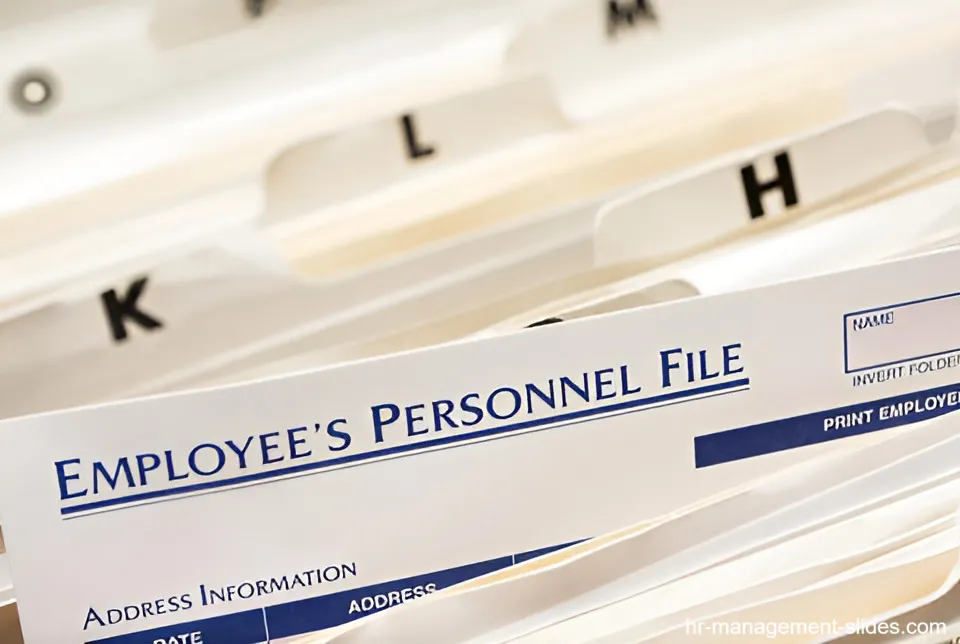
Managing employee records efficiently is crucial for any organization. An employee personnel file template helps HR departments keep essential documents organized, ensuring compliance with labor laws and company policies.
A well structured file system simplifies audits, performance tracking, and legal documentation, making it an indispensable tool for HR professionals.
Without a standardized approach, businesses risk losing critical records, leading to potential legal and operational challenges.
Understanding Employee Personnel Files
An employee personnel file is a collection of documents that record an employee’s history within a company.
These records include personal information, job applications, tax forms, performance reviews, and disciplinary actions.
Keeping these files well organized is essential for legal compliance, audits, and employee management. A structured system using an employee personnel file template ensures all necessary documents are collected and maintained properly.
Each employee file typically consists of multiple sections to categorize information effectively. Personal details, employment history, payroll documents, and disciplinary records should be kept in clearly labeled folders or digital sections.
Employers must ensure that these documents are stored securely to protect employee privacy and comply with data protection laws.
Properly maintained personnel files also help in tracking an employee’s progress, providing valuable insights for promotions and career development.
Ready to Use Employee Personnel File Checklist Template
Below is a sample checklist template that HR professionals can use to structure employee personnel files effectively:
Category
Document Type
Required/Optional
Personal Information
Employee ID, Contact Details, Emergency Contacts
Required
Employment Documents
Offer Letter, Contract, Job Description
Required
Payroll & Tax Forms
W-4 Form, Direct Deposit Form, Salary Records
Required
Performance Records
Performance Reviews, Training Certificates
Optional
Attendance & Leave
Attendance Sheets, Leave Applications
Optional
Disciplinary Records
Warning Letters, Termination Notice
Optional
Health & Safety
Medical Records, Workplace Safety Training
Optional
This checklist ensures HR professionals collect and maintain all vital employee information efficiently. It also simplifies audits and performance tracking.
Employers should periodically review these records to ensure accuracy and completeness, updating documents as needed.
Maintaining a digital backup of these files can also help in disaster recovery planning, ensuring critical employee information is not lost due to unforeseen circumstances.
To create and manage an employee personnel file template, you can use various software tools, including:
Microsoft Word: Ideal for creating structured documents with clear sections and formatting.
Microsoft Excel: Useful for tracking and organizing multiple employee records in a spreadsheet format.
PowerPoint or Canva: If you need a more visually appealing and engaging file system, these tools offer customizable templates with professional designs.
HR Management Software: Platforms like BambooHR, Workday, and Zoho People provide automated personnel file management, reducing paperwork and enhancing efficiency.
For businesses looking for a digital approach, HR software offers built in compliance checks, secure storage, and easy retrieval of records.
This not only ensures data integrity but also makes audits and HR reporting more seamless. Additionally, cloud based HR systems allow remote access, making it easier for HR teams to manage employee records from anywhere securely.
Benefits of Employee File Checklist and Its Function
Ensures Compliance – Helps companies meet legal and regulatory requirements by maintaining complete and up-to-date records. Employers must retain specific records for a set period to comply with labor laws.
Enhances Organization – Reduces clutter and confusion by standardizing document storage and retrieval. A well-structured system ensures that documents can be found quickly when needed.
Improves HR Efficiency – Streamlines onboarding, payroll, and performance management, saving time and resources. HR teams can focus on strategic initiatives rather than administrative tasks.
Reduces Legal Risks – Having properly documented records can serve as evidence in disputes, ensuring that all employment decisions are well-supported.
Enhances Employee Experience – Employees benefit from clear documentation regarding their roles, compensation, and performance expectations, leading to better workplace transparency.
Facilitates Internal Audits – An organized personnel file system makes it easier for HR departments to conduct internal audits, ensuring policies are followed correctly and identifying potential areas of improvement.
Supports Workforce Planning – By analyzing employee records, HR professionals can identify trends, skill gaps, and areas for training, helping with long-term workforce planning and decision-making.
By implementing a comprehensive employee personnel file template, businesses can avoid administrative bottlenecks and ensure a smooth HR workflow.
Proper personnel file management also fosters trust and accountability within the organization, reinforcing a culture of compliance and efficiency.
Want to improve your HR management strategies? Visit hr-managements-slides.com for more insights and download free HR templates to streamline your HR operations.
Employee Self Service Tools are transforming how businesses manage their HR processes. These tools empower employees by giving them direct access to essential HR functions, reducing administrative burdens on HR teams.
With self-service software, employees can update personal details, check payroll information, request leaves, and access company policies without needing HR intervention.
This efficiency not only saves time but also enhances employee satisfaction. As businesses strive for digital transformation, adopting an effective Employee Self Service Tool becomes crucial in maintaining a productive and engaged workforce.
Why Companies Need Employee Self Service?
Companies need Employee Self Service tools to streamline HR operations and improve overall efficiency. Traditional HR processes often require manual intervention, which can lead to delays, errors, and unnecessary workload for HR professionals.
By implementing self-service solutions, businesses can empower employees to handle routine tasks on their own, reducing dependency on HR teams.
This shift not only boosts efficiency but also fosters a more transparent and engaging work environment.
Additionally, companies that adopt self-service technology can enhance data accuracy and compliance, minimizing risks associated with manual HR management.
Benefits of Implementing Employee Self Service
You can gain many advantages by using an Employee Self-Service (ESS) system, including increased productivity and greater data accuracy. Read on for a more complete explanation.
1. Increased Productivity
By automating routine HR tasks, Employee Self Service tools free up valuable time for both employees and HR personnel.
Employees can manage their own data, check work schedules, and track their benefits without waiting for HR assistance. This efficiency allows HR teams to focus on strategic initiatives rather than being bogged down by administrative requests.
2. Enhanced Employee Experience
A seamless self-service system enhances the employee experience by providing quick and easy access to essential HR information. Employees appreciate the ability to update personal details, view payslips, and submit time-off requests independently. This autonomy fosters a sense of empowerment and job satisfaction, contributing to higher employee retention rates.
3. Improved Data Accuracy
Manual HR data entry is prone to errors, which can lead to payroll discrepancies and compliance issues. Employee Self Service Tools eliminate these risks by allowing employees to input and verify their own data.
With real-time updates and automated validation processes, companies can ensure accurate records, reducing administrative errors and enhancing compliance with labor regulations.
Before selecting an Employee Self Service (ESS) tool, businesses should consider several key factors:
User Friendliness: The platform should be intuitive and easy for employees to navigate without extensive training.
Mobile Accessibility: A responsive mobile application is essential for employees who need to access HR services on the go.
Integration Capabilities: Ensure the software integrates seamlessly with existing HR and payroll systems to avoid data discrepancies.
Security and Compliance: The tool should offer robust security features to protect sensitive employee data and comply with labor regulations.
Customization Options: Different companies have unique HR policies, so a flexible and customizable system can better align with business needs.
Recommended Employee Self Service HR Software
Having reviewed several important points in selecting an Employee Self-Service (ESS) system, we now recommend the following two top software solutions. We encourage you to visit the official websites of each provider to explore demo or trial options.
Workday
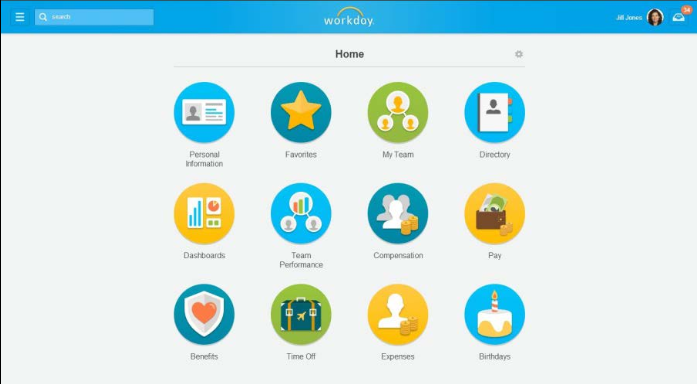
Workday is a leading cloud based HR solution that offers robust Employee Self Service features. Employees can manage their profiles, request time off, track payroll, and access training programs all in one place. Its self-service portal is designed with an intuitive interface, ensuring ease of use for employees at all levels.
Additionally, Workday’s mobile compatibility allows users to handle HR-related tasks anytime, anywhere. Its advanced analytics also provide insights into workforce trends, helping HR teams make data-driven decisions.
ADP Workforce Now is a powerful HR platform designed for businesses of all sizes. It provides employees with easy access to payroll information, benefits enrollment, and work schedules. With an advanced mobile app, employees can manage their HR needs anytime, anywhere.
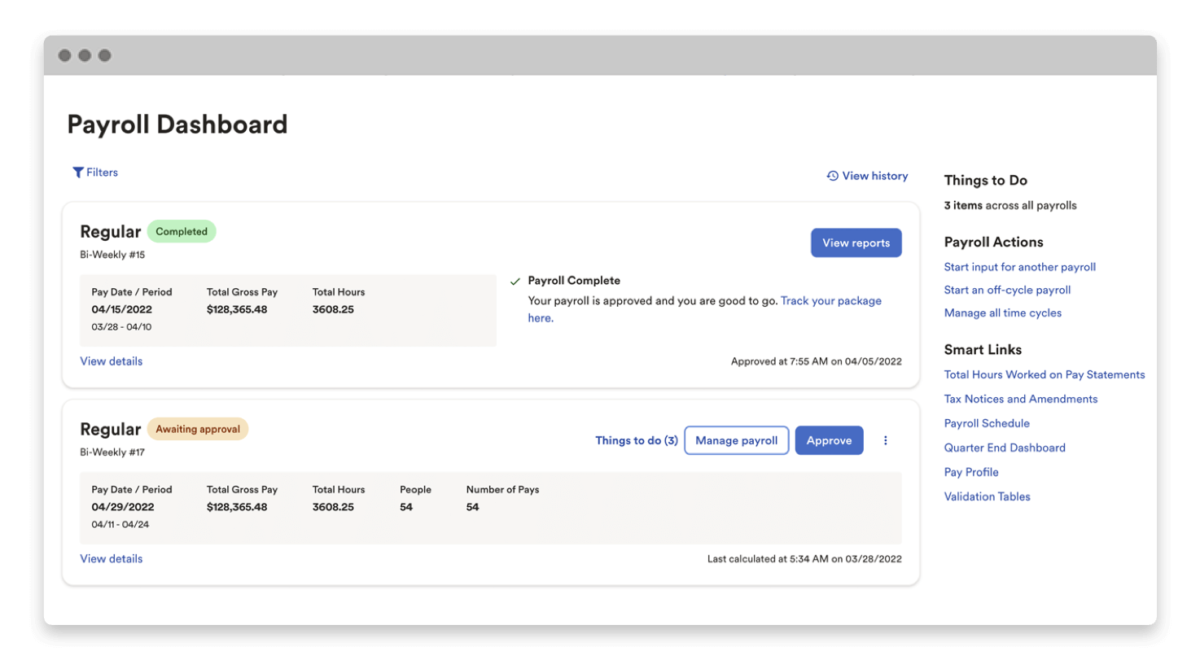
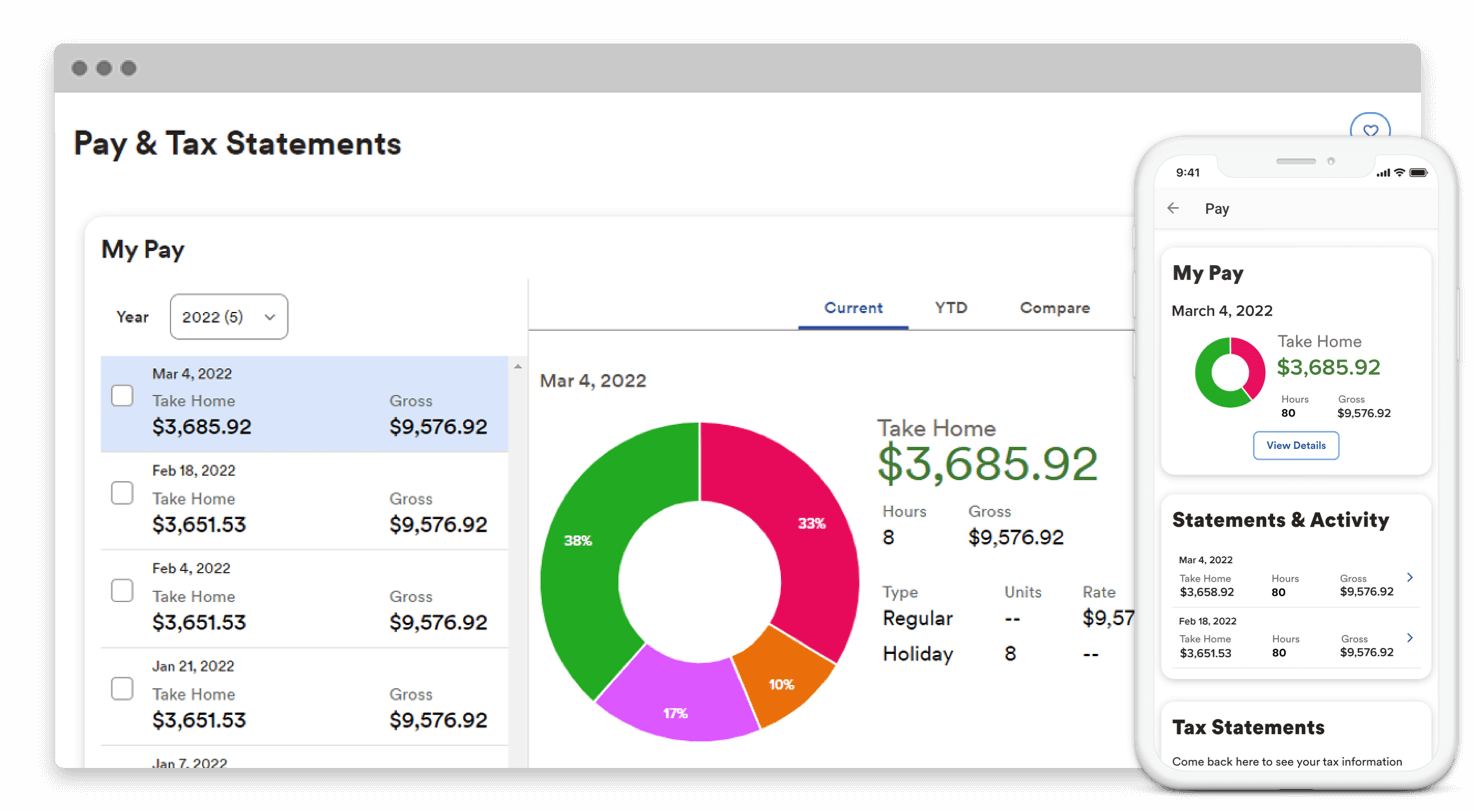
One key feature is the self-service payroll access, allowing employees to view their pay stubs and tax forms instantly.
The platform also offers a benefits enrollment module, simplifying the open enrollment process. ADP Workforce Now integrates seamlessly with other business tools, ensuring smooth HR operations.
Investing in the right Employee Self Service Tool can significantly improve HR efficiency and employee engagement. For more insights on HR management strategies and tools, visit HR Managements Slides.
Confidentiality is the backbone of trust in any organization. Without it, sensitive employee and company information can be exposed, leading to legal and reputational risks. This is where an HR Confidentiality Agreement Template becomes essential.
It outlines the obligations of employees and HR personnel to safeguard private company data. By implementing a strong confidentiality agreement, businesses can ensure that proprietary information, employee records, and strategic plans remain secure.
Whether you’re a small business or a large corporation, having a well-structured confidentiality agreement is crucial for protecting your organization from potential data leaks and legal issues.
Things You Need to Know About HR Confidentiality Agreement
An HR Confidentiality Agreement is a legal contract that restricts employees from disclosing confidential information related to the company. It applies not only to HR professionals but also to employees who handle sensitive data.
This agreement ensures that private business strategies, financial details, employee records, and trade secrets are not shared outside the organization.
It helps in preventing data breaches, identity theft, and unfair competition. Furthermore, it legally binds employees to maintain confidentiality even after they leave the company, protecting your business in the long run.
Why Corporations Need an HR Confidentiality Agreement?
1. Protects Sensitive Employee Information
HR departments handle vast amounts of sensitive employee data, including personal records, payroll details, and medical information. Without a confidentiality agreement, there is a risk of unauthorized disclosure, which can lead to identity theft or misuse of private information.
A well-drafted agreement ensures that employees handling such data maintain strict confidentiality, reducing the chances of breaches and legal repercussions.
2. Safeguards Business Secrets and Intellectual Property
Companies invest significant resources in developing proprietary processes, client databases, and strategic plans. If employees disclose such information to competitors or outsiders, it can harm the business.
An HR Confidentiality Agreement helps in legally protecting these assets, ensuring that employees understand the consequences of sharing classified information, and reducing the risk of corporate espionage.
3. Builds Trust and Strengthens Company Reputation
When employees and stakeholders know that a company prioritizes confidentiality, it builds trust and enhances the organization’s reputation.
Clients and partners feel more secure working with businesses that have strong data protection policies in place. Implementing an HR Confidentiality Agreement also reinforces compliance with data protection laws, helping the company avoid potential legal disputes related to privacy violations.
HR Confidentiality Agreement Template (Ready to Use)
Below is a sample HR Confidentiality Agreement Template that businesses can adapt:
[Company Name] HR Confidentiality Agreement
Effective Date: [Date] Parties: [Company Name] and [Employee Name]
1. Purpose
This agreement aims to protect confidential and proprietary information belonging to [Company Name]. The employee acknowledges that they will have access to sensitive company data and agrees to maintain its confidentiality.
2. Definition of Confidential Information
Confidential Information includes but is not limited to:
Employee records and personal data
Payroll and compensation details
Business strategies and trade secrets
Financial reports and company policies
Any other proprietary information disclosed during employment
3. Obligations of the Employee
The employee agrees:
Not to disclose confidential information to unauthorized individuals
To use the information solely for work-related purposes
To return or destroy confidential documents upon termination of employment
4. Consequences of Breach
Any violation of this agreement may result in disciplinary actions, including termination of employment and legal proceedings.
5. Term and Termination
This agreement remains in effect during and after the employee’s tenure with [Company Name].
What Must Be Included in an HR Confidentiality Agreement?
There are several essential elements that must be included in an HR Confidentiality Agreement template.
To ensure you create an effective and suitable document for your corporation, be sure to understand the following explanations, then customize the agreement to align with your specific corporate needs
A confidentiality agreement should specify what constitutes confidential data within the company. This includes personal employee information, company financial records, business strategies, client lists, and proprietary processes. Clearly defining these elements prevents misunderstandings and ensures employees understand what they are legally bound to protect.
2. Employee Responsibilities and Restrictions
The agreement should outline the employee’s obligations regarding confidential information. It must state that the information should only be used for work-related purposes and should not be shared outside the organization. Additionally, it should include guidelines on how employees should handle sensitive data and what actions must be taken if they suspect a breach.
3. Legal Consequences for Violations
To reinforce the importance of confidentiality, the agreement should specify the penalties for violating the terms. This could include termination of employment, financial penalties, or legal action.
A strong enforcement clause ensures employees take the agreement seriously and prevents potential breaches from occurring.
That’s all everything about HR Confidentiality Agreement template. For more HR tips and resources, visit hr-managements-slides.com and stay updated on best practices for securing employee and company information.